Journal / Nishiki
What to Eat at Nishiki Market, and How to Eat It
People ask me what to eat at Nishiki, and it's a harder question than it sounds. There are more shops on that street than anyone takes in on a single pass. So rather than list everything, here are the five things I actually point my guests toward — and then the part most guides leave out, which is how to eat them.
Five things I point people to
- Tofu. Kyoto's water is soft, and the tofu here tastes of it. Cold, plain, with almost nothing on it — better than it has any right to be.
- Yuba. The delicate skin that forms on soy milk as it warms. Kyoto has been eating it for centuries, and it still surprises people who expect it to taste of nothing.
- Dashimaki. The rolled omelette, made with dashi rather than sugar. At some stands you can watch it being rolled, pan after pan, right in front of you.
- Chirimen sansho. Tiny dried fish simmered with sansho pepper — salty, citrusy, faintly numbing on the tongue. This is the one people end up taking home.
- Nama-fu dengaku. Fresh wheat gluten, grilled and brushed with miso. Chewy in a way that nothing else quite is.
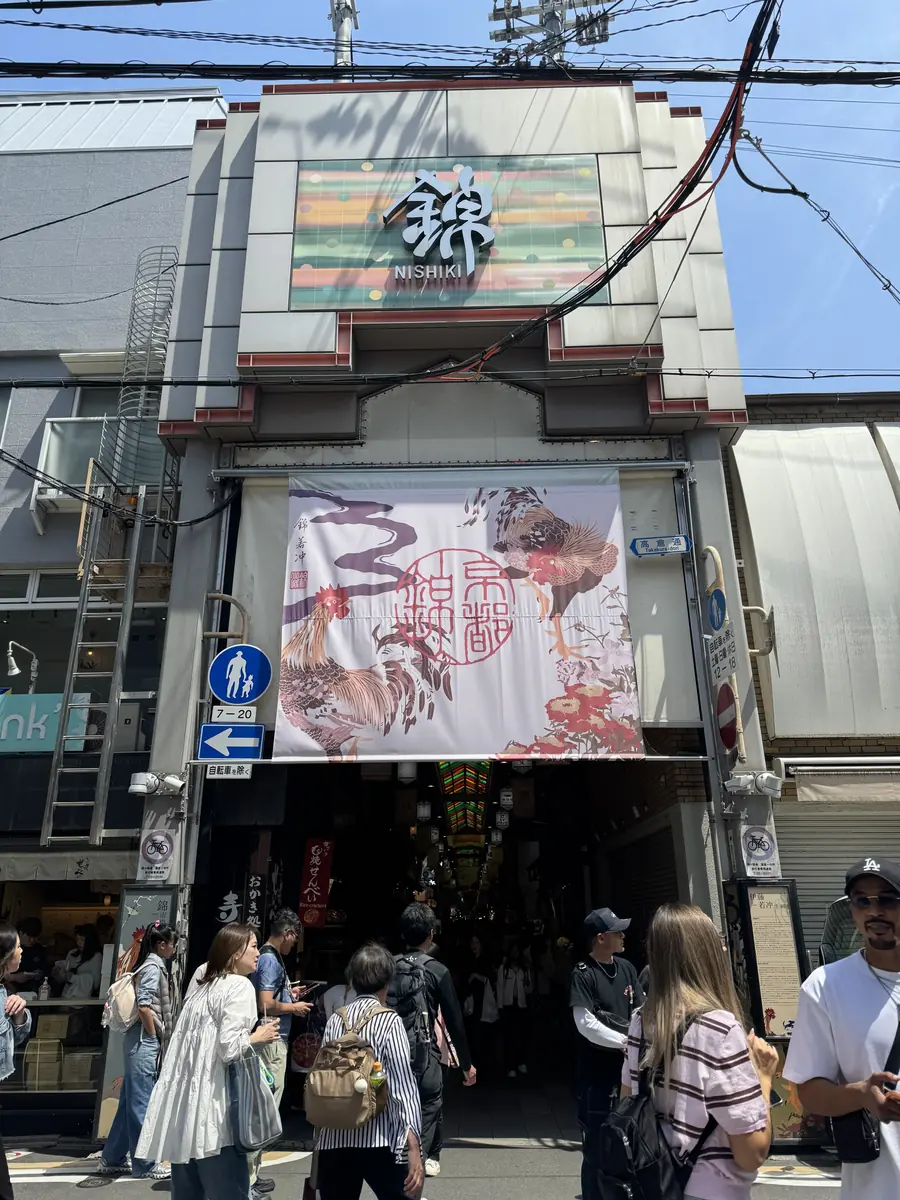
Please don't eat while you walk
If you remember one thing from this note, make it this one. Nishiki is a working street — narrow, busy, and full of people doing their shopping. Eating on the move is not how it is done here.
What to do instead is simple. Buy your food, eat it standing in front of the shop you bought it from, and hand the rubbish back to them when you are finished. The shops expect this. It isn't an imposition; it's the arrangement.
How to tell the local shops from the tourist ones
This is easier than people think, and once you see it you can't unsee it. A sign in English. A big painted fish out front. A display built to catch your eye. All of that is for visitors.
Kyoto's own shops don't do any of it. Their signs are plain — small, quiet, often just the name. The shop the neighbourhood actually buys from is not trying to get your attention.
Start from the Daimaru end
That's the direction I'd suggest: begin at the Daimaru end and walk through from there. You'll finish at Nishiki Tenmangu, at the far end of the street — a good place to stop for a moment before you rejoin the city.
If you'd like to know which shops those are, that's what my Nishiki Market food tour is for — and if you're working out the timing, I've written about when to go as well.