Journal / Gion Matsuri
Gion Matsuri Yoiyama: the Nights Before the Crowds
When the float building begins, I get a little thrill — this is when I feel that summer has truly arrived.
Every year I go to watch one of the floats going up. This year I couldn't resist photographing the Naginata-hoko as it was built. The floats — the tall hoko and the smaller yama — are assembled right in the streets, by hand, held together with wood and rope and no nails, the way it has been done for centuries. When one is finished there's the hiki-zome, the first test pull, and you'll see the neighborhood come out to haul it down the street together in the heat.
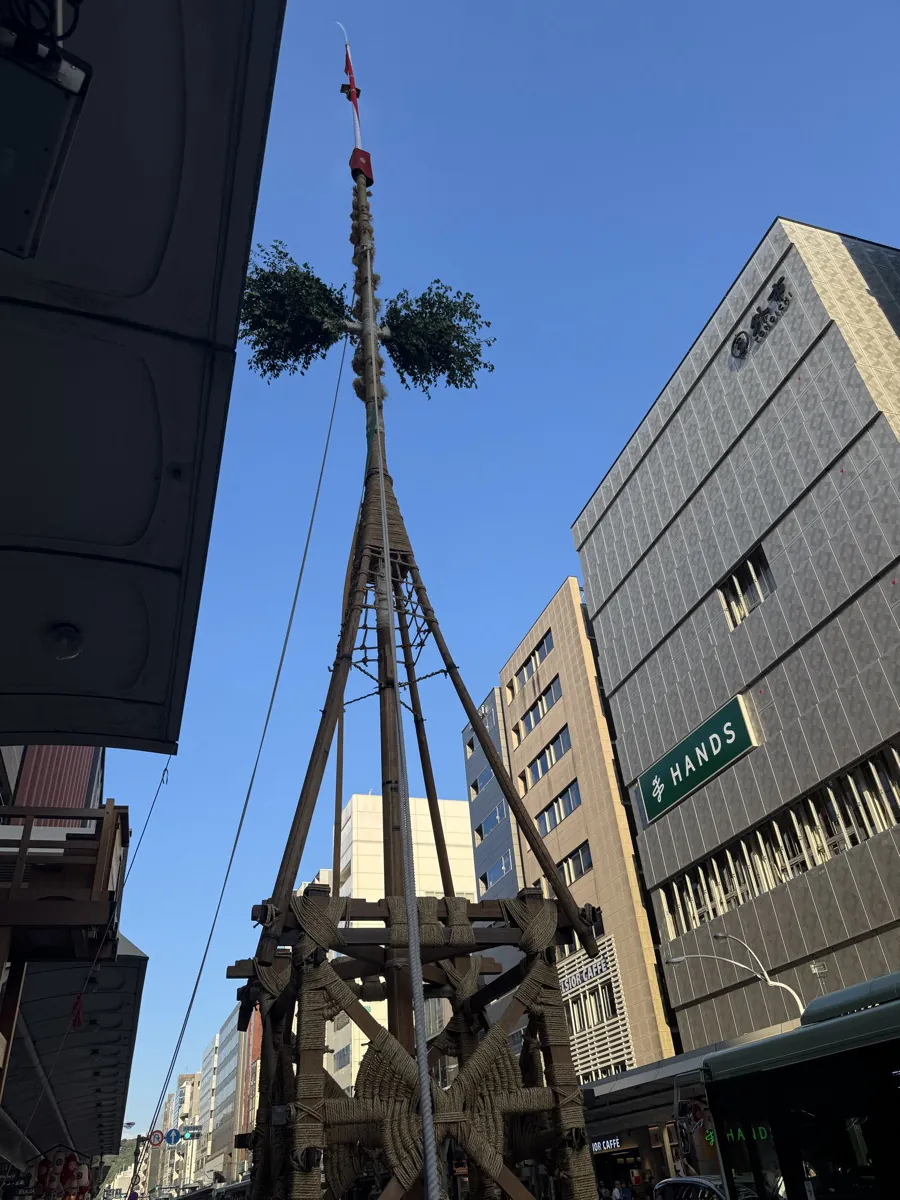
In the days before yoiyama, my favorite thing is simply the evening walk. It's hot, but if you go out for a slow stroll at night — sozoro-aruki, we call it — you start to catch the festival music drifting down from the floats, and the streets fill with lantern light.
The night I love most, honestly, is yoi-yoi-yoiyama — three nights before the procession, whether for the first festival or the second. That's when there are the fewest visitors and the food stalls aren't out yet, so nothing feels crowded. Just Kyoto to wander through. It's the most dreamlike the whole festival gets.
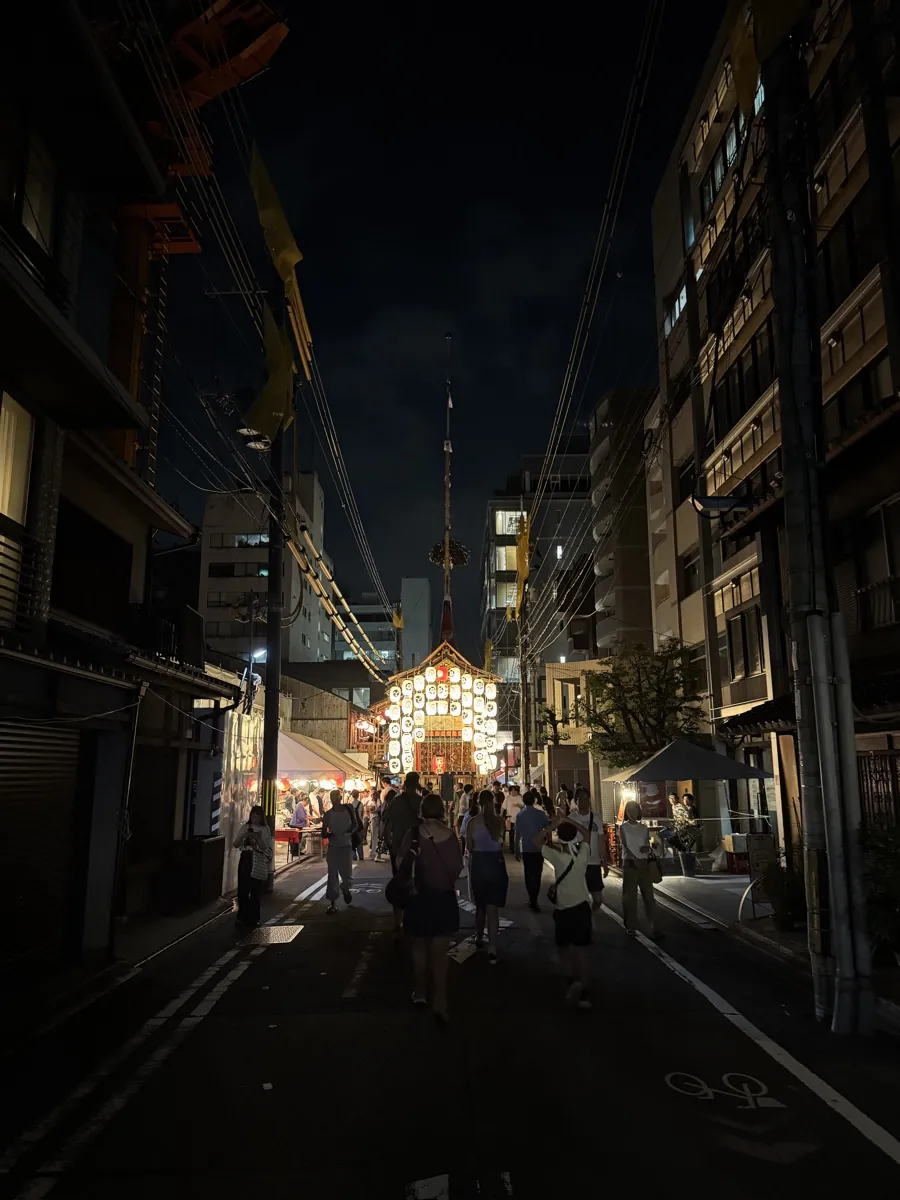
That's the time to stand close to the floats and really look — the treasures that decorate them, the centuries-old tapestries the float neighborhoods have kept and cared for. And listen: the musicians play up on the floats, and here's something people often miss — each hoko and yama has its own music, its own tune. See if you can tell them apart.
If you come to Kyoto during the festival, that's how I'd tell you to spend an evening — not on the busiest night, but a few nights before, walking slowly and letting the music find you. If you'd like a local to walk it with you, that's what my private walks are for.